On This Day: Remembering Usain Bolt’s ‘forgotten world record’

On a murky evening in New York City, 21-year-old Usain Bolt towers over his competition even when stooped in his blocks awaiting starter’s orders.

Alongside him is Tyson Gay, reigning world champion over 100 and 200-meters, but something incredible was so clearly in the making when the rangy, 6’5” Bolt began to break clear at the 20-meter mark of the 2008 Reebok Grand Prix.

His long legs are a hindrance out of the blocks, but once they carry him to his top speed of almost 28mph he is leagues above the rest. The world did not quite know it yet, but nobody catches up to Usain Bolt.

As he ruthlessly extends his lead, world-class rival Gay is left staring at a clean pair of heels and a trackside timer which stopped at 9.71 seconds. The time would later be corrected to 9.72 but the result did not change, Bolt had just become the fastest man in history.

Weeks later, Bolt would capture the hearts and minds of virtually the entire world at the Beijing Olympics where he won his first clean sweep of gold medals. Indeed, that was where the main part of Bolt’s movie began, but the unorthodox lead-up, capped off by that scintillating performance in New York, is just as important.

Becoming Lightning Bolt

Not many 100-meter sprinters are two meters tall. With a race that often begins and ends in under ten seconds, explosivity and acceleration are paramount, with top speed only coming into play more than halfway down the track.

As such, Bolt was a born and bred 200-meter runner, smashing the world junior record in 2004 with a stunning sub-20 second time.

It is a little-known fact that the Jamaican competed at the 2004 Olympic Games in Athens, nursing a slight hamstring injury while failing to keep up with a fairly average field in his 200-meter heat.

That disappointment aside, such a stunning performance at the World Junior Championships was enough to convince many experts that Bolt was destined for success, but few could have predicted the sheer domination he would eventually wield over the shorter distance.

As uncovered by Michael Johnson’s BBC documentary, The Fastest Man Who Has Ever Lived, Bolt is, by his own admission, a lazy trainer.

The young Jamaican constantly lobbied his coach Glen Mills to let him run the hundred, which came with a lighter training schedule, until the pair settled on a wager; if Bolt broke the national 200-meter record, he would finally get his shot.

At the 2007 Jamaican Championships, Bolt did just that, eclipsing a record set by sprinting legend Don Quarrie in 1971. According to the Jamaica Gleaner, his response was simply “When is the 100m?”
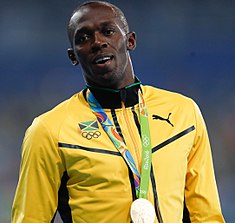
Courtesy of Fernando Frazão via Wikipedia

Three weeks later, the man who would go on to be labelled ‘Lightning Bolt’ ran his first ever competitive 100-meters in Crete, posting a promising but unremarkable time of 10.03 seconds.

Then, things caught fire. In just his third race he came within 0.02 seconds of Asafa Powell’s world record, posting a 9.76 at the Jamaica International Invitation in Kingston, a time that would have easily taken any Olympic final in history.

The most hard-nosed critics were sceptical of that time’s legitimacy given Bolt romped home a full 0.32 seconds ahead of his nearest challenger on the night. How could anyone blame them? On what planet could this genetic anomaly come so close to the fastest time in history in just his third competitive 100-meter race?

Weeks later, Bolt had his arms spread wide as he powered round the corner in New York, leaving a world-class field obliterated in his wake.

The new world record holder had made history in just his fourth competitive 100-meters at a meeting few outside the athletics world would have watched, but it ensured his name was on everybody’s lips heading towards the big stage in Beijing.

Perhaps there has never been an athlete more suited to the global limelight. When the camera pointed his way, he was in his element. When he danced on the start-line or crouched into his signature lightning bolt pose, the crowd erupted. When he put his finger to his lips and zoned in mere seconds before the starter’s gun, the crowd fell silent. Beijing was the Bolt show, all other athletes were the supporting cast.

After jogging through his heat and semi-final in the same way anyone else might do when flashed across the road by a waiting car, the Jamaican was ready to put on a show for the Olympic final.

Almost a carbon copy of his record in New York one month prior, Bolt powered away from the pack, bursting into celebration a full 25-meters before the finish line, beating his chest once and taking care not to trip over his untied shoelace as he broke his own world record.

In New York he announced himself to the sporting world, in Beijing he announced himself to the world. Six days later he would round off Beijing with three gold medals and three world records, adding the 200-meters and 4×100-meter relay to his budding collection.

Of course, what Bolt went onto achieve in London, Rio de Janeiro and particularly Berlin, where his world records of 9.58 and 19.19 still stand today, will forever be etched in history. Indeed, so will his first world record in New York, although you might have to look further down the page.

On 31st May, we remember the 13th anniversary of Bolt’s first 100-meter masterclass which, if his coach got his wish, almost didn’t happen at all.
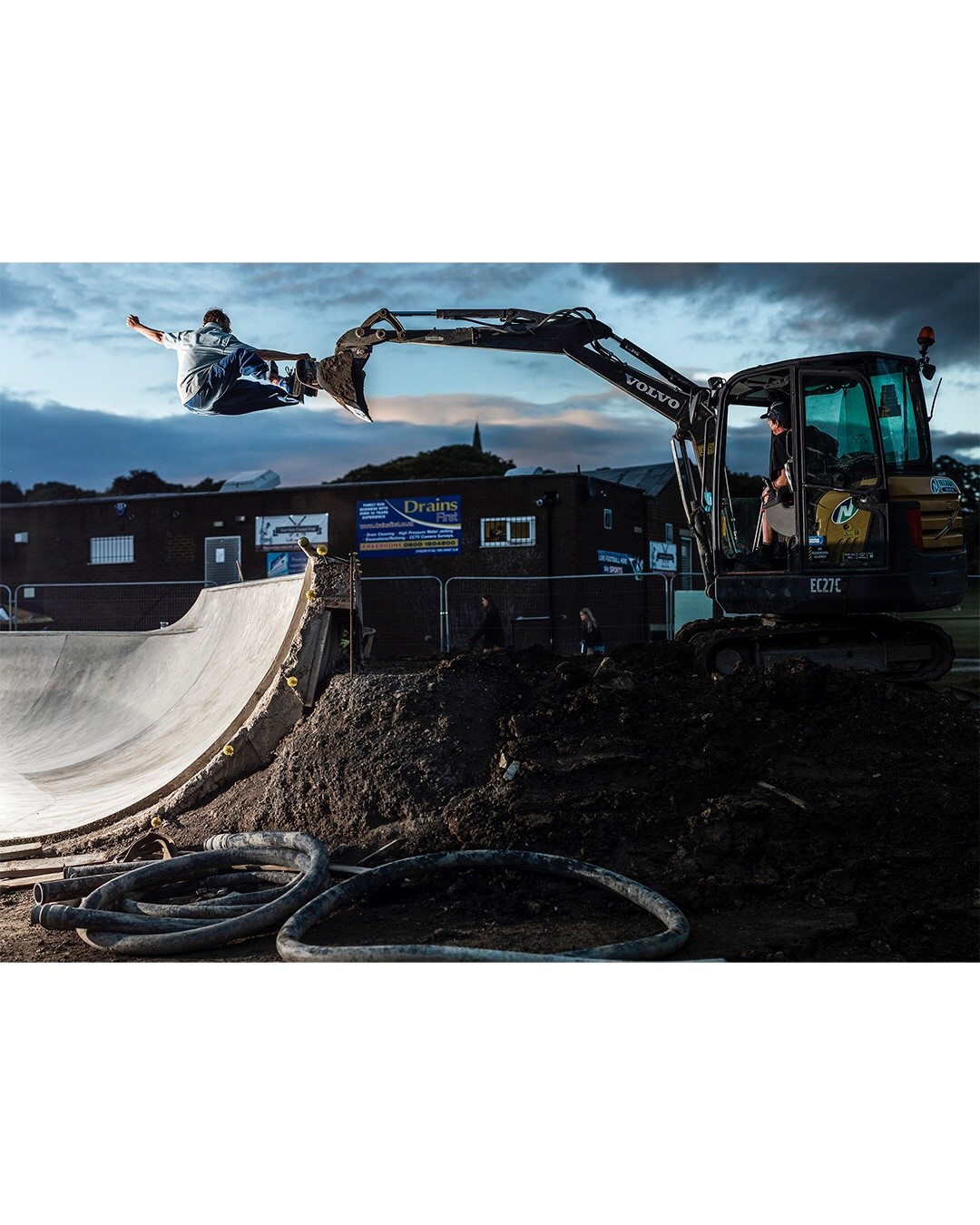
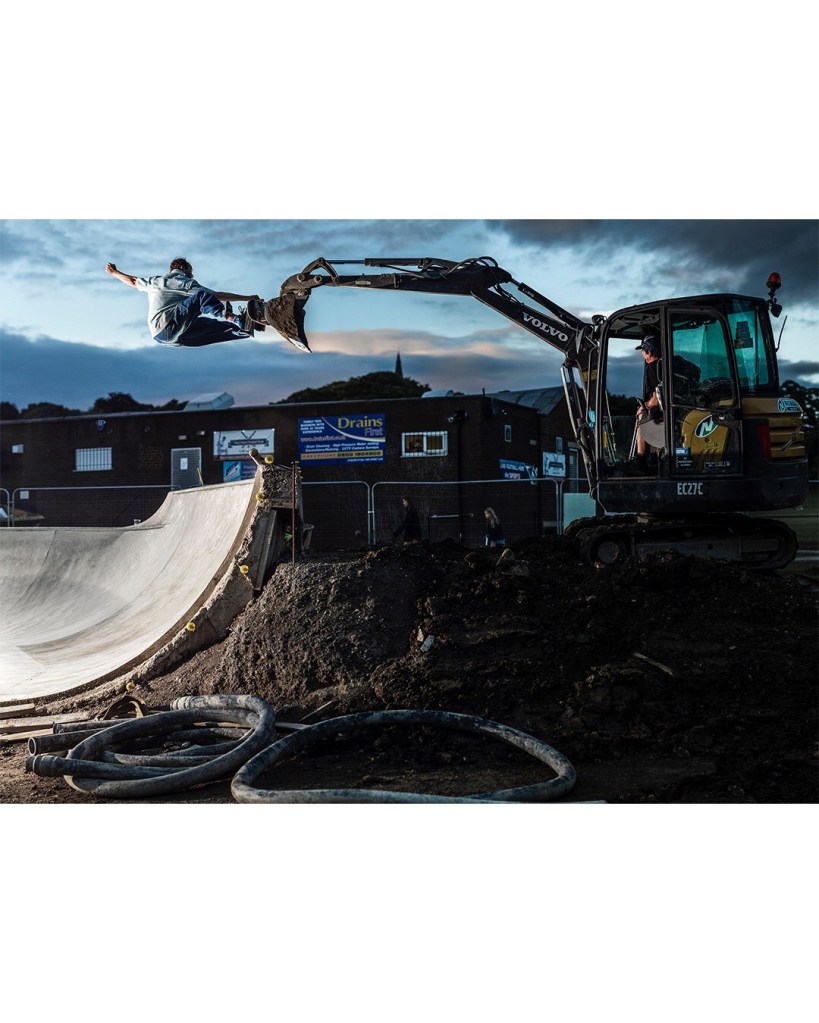
GB skateboarder Alex Hallford on the sport’s new Olympic age

At the start of 2020, skateboarding was gearing up to make its Olympic debut among the likes of sport climbing, karate and baseball. Having never featured in the games’ 124 year history, fans and competitors were begrudgingly made to wait one more year thanks to the COVID-19 pandemic.

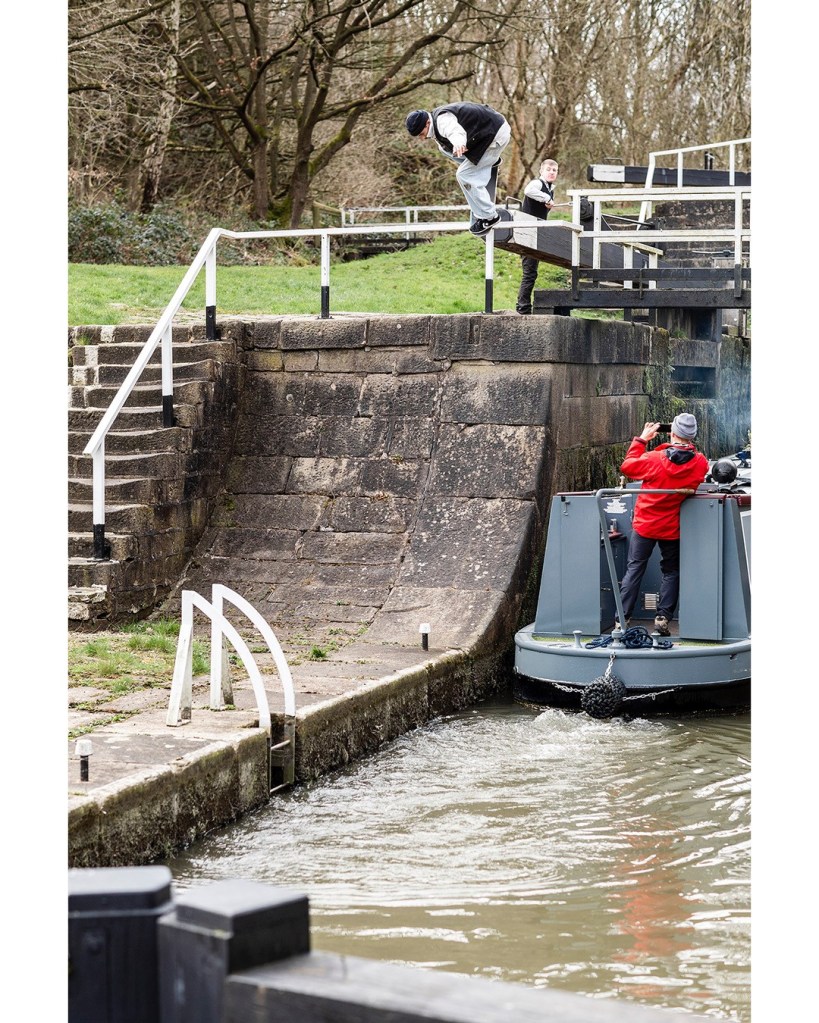
With the re-scheduled Tokyo ‘2021’ edging ever-closer, Team GB will soon form their own contingent of skateboarders to fight for gold in the sport’s maiden campaign. Alex Hallford, a shaggy-haired skateboarding sensation from Nottingham, is one of those vying for a seat on the plane.

Courtesy of Alex Hallford

At face value, all seems rosy for Hallford and the sport. However, among certain subgroups of skateboarding fandom, there is a persistent unease with the cultural incompatibility between a rebellious, underground sport and a mainstream global event. Certainly, the Olympics represent a daunting yet exciting crossroads for one of the gnarliest sports around.

Hallford first picked up a skateboard at the age of ten. He said: “I saw someone skating on my local mini-ramp when I was a kid and that was that. It looked amazing, visually seeing someone fly around on a board was what got me hooked initially, and the feeling was way better when you’re doing it yourself.”

An up-and-down love affair with the sport characterised his teenage years, but the 28-year-old has now jumped in head first, earning first place in the GB National Championships back in April.

Having taken a huge step towards Olympic qualification, Hallford still seems noticeably relaxed as he discusses his chances from the backroom of Nottingham’s FortyTwo skate shop.

He said: “I’m not exactly sure where I’m standing on the world leaderboards at the moment but I’m getting closer. We’re just lucky the nationals happened, it was great fun and great to see everyone again. We’ll see where I end up.”

Such a laid back attitude is typical of skateboarding’s long-cultivated counter-culture. A recent interview Hallford conducted for Men’s Health described it as ‘beautiful chaos’.

In less poetic terms, Hallford said: “The culture is wicked. There is such a broad spectrum of people skating – some people don’t drink, some people love drinking while they skate, there’s a bit of everything.

“It’s been through the highs of becoming quite mainstream and then it became super underground again. It’s very creative as a sport so it’s always attracted those who want to be creative with physical expression, almost like dance.”

It therefore came as a surprise when a sport built on creative identity and rebellious principles became associated with the polite, suit and tie wearing anti-political realm of The Olympics. It seems almost like a collaboration between Red Bull and Yorkshire Tea – both loosely in the same domain, but… really?

Hallford said: “I think it was basically inevitable with snowboarding and the success that has had in the winter Olympics. The cultures do contrast though, that’s for sure.

“Some people within skateboarding are anti-Olympics but at the end of the day it will never really affect the underground – those scenes will always be there anyway. I’m interested to see how it all pans out.”

Courtesy of Alex Hallford

One thing is for sure, it is a giant leap for the exposure of competitive skateboarding. Those involved with the sport have been consulted in the establishment of Skateboard GB, their own Olympic department, but scarce funding leaves them without a nutritionist or physiotherapist which many other countries enjoy.

Balance, awareness, stamina and courage are all key attributes in what is an extremely demanding sport, meaning nutrition and conditioning have become increasingly important as time has worn on.

The Olympics is a step in the right direction towards popularising the competitive branch of the sport, but the absence of proper funding leaves plenty of growing room.

Hallford said: “It’s one of those sports which looks extremely easy but it’s definitely not – I’d put it up there as one of the hardest.

“You have to take the elite level events seriously if you want to do well. The older skaters have already started to set an example for the younger ones, because among the younger group there is a lot of partying so it’s all filtering down.

“You’re putting your body through a lot of stress and impact; all it takes is one little slip up and you can really damage yourself so having people on hand would be very helpful. Hopefully, there will be more funding in the years going forward so that me or whoever else qualifies for the Olympics can benefit from it.”

One has to wonder about skateboarding in a post-Olympic world. The most protective skaters will worry that an influx of new participants could dilute their culture, while the idea of skating to attain sporting recognition rather than joy is enough to make some feel sick to their stomach.

Hallford is markedly more optimistic, citing increased funding for skate parks and improved business for board markers as two key positives. He added: “These days it is very inviting and people are very welcoming, at least in Nottingham and around the UK.

“It’s still a very hard sport, a load of people might get into it but you still have to be a certain kind of person to stick it through and want to keep falling off and progressing. Whether new people flood in or not, skateboarding will always have its own offshoots and subcultures.”

Hallford could seal his Olympic qualification through competitions in the coming weeks, meaning there could be plenty for everyone to be excited about this summer.

A smattering of sporting neutrals will soon marvel at skateboarding’s maiden voyage into the global televised mainstream. Meanwhile, the stubbornly rebellious wing within the sport should, according to Hallford himself, have faith that it will be able to navigate through a changing landscape with their unique principles in intact.

Ligue 1 crippled by broadcast deal chaos

From April 2020 to June 2021, a postponed season and collapsed broadcasting deal will have cost Ligue 1 clubs in the region of £1.5 billion. As a result, a league already self-conscious about their status as the fifth of Europe’s top five is now scrambling for money and clinging onto their top talent.

Going back to 2019/20, Ligue 1 made the cautious decision to cut their season 10 games short while Italy, Spain, England and Germany all played on without incident.

Ligue 1 journalist Eric Devin said: “I am sure there are those who regretted it. But, for whatever reason, the issues that France have had with COVID have been strongly felt within football.

“The fact that there have been so many issues in France implies that the decision may have been the right one. PSG missed virtually every important player at various points in the season due to COVID. Some footballers were seriously ill, Montpellier’s Junior Sambia was in hospital for weeks with question marks over whether he would live.”

Like it or loathe it, the decision certainly came at a price. Loss of gate receipts and broadcast revenue from those final games amounted to almost £1 billion on its own, and that is without what happened next.

Courtesy of Ligue 1 via Wikipedia

In 2018, Barcelona-based broadcasting company MediaPro pledged £700m per season to Ligue 1 and 2 until 2024, an unbelievable 60% increase from France’s previous record deal. Serie A had rejected a similar offer from MediaPro months earlier due to concerns over their financial stability, a shrewd move which retrospectively rubs salt into the wounds of French football authorities.

A monthly subscription service was set up, requiring 4 million subscribers for MediaPro to breakeven. After a meagre 600,000 signups, 15% of their target, scheduled payments to Ligue 1 were missed and the whole deal fell through. Without matchday or broadcast income, French football clubs were suddenly without two of their three primary revenue streams.

Given that circumstances surrounding the collapse did not exactly shower Ligue 1 in glory either, or that according to Forbes, French football broadcasting has been unprofitable for many yearsfinding a replacement has not been easy.

Devin said: “There is money in the league but the ambition of the broadcast deal was probably a step too far. What the broadcaster hoped to get out of the league in terms of subscriptions was overly ambitious and should have been examined a lot more closely.

“The economic downturn as a result of the pandemic also had a knock-on effect. There is a general sense of fear and conservativism so people are being more cautious. Nobody could have predicted the pandemic when the deal was made but perhaps there should have been some allowances given the circumstances.”

Aside from Qatari-led PSG and Chinese-owned Lyon who remain relatively insulated from the financial chaos, there are serious implications for the rest of the league as the task of raising funds becomes more and more pivotal.

Morgan Sanson was one of the first to fall, joining Aston Villa from Marseille in January, and more are set to follow. Lille are joint-league-leaders having performed well above expectations, but the huge debts piling up behind the scenes suggest that many of their breakout stars will need to be auctioned off in the summer.

Devin remarked: “We hate to acknowledge this but it is a selling league which relies on the churn-out of players. Lille pay a massive £6 million per year to use the Stade Metropole, a payment which still needs to be dealt with even though there are no fans in the ground.

“They inflicted AC Milan’s heaviest ever home defeat in Europe this season, but who knows what the team will look like come this summer.”

Another unwanted product of financial turmoil is a reluctance to announce contract extensions. The uncertainty surrounding an unsettled broadcast deal means clubs simply do not want to commit to bumper long-term wages, while those with short contracts come transfer time will be worth a smaller fee.

The elephant in the room surrounding this summer’s window is the future of Kylian Mbappe. A 23-year-old World Cup winner, Champions League finalist and global superstar already has little left to prove in the French game, but his departure would be a huge blow to the allure of Ligue 1.

Devin said: “Those who have left PSG in recent seasons have done so because they are older, out of contract or not as useful. By and large, players don’t leave unless things are winding down, that’s what is most troubling.

“As much as PSG have made their way into the upper echelons of club football, they’re never going to have the cache of a Real Madrid, Barcelona or Manchester United.

“With Robert Lewandowski missing for Bayern Munich in the Champions League quarter-finals, this could be a grand opportunity for PSG to win it. If he does then maybe he is convinced to stay, but I think maybe another disastrous exit could be too trying of his patience.”

So where does this leave French football? Well, a pending court case should grant the league a portion of their foregone broadcast revenue, but significant damage has already been done. This being said, as long as clubs ride out the financial storm and commit to a damage-limitation summer, there are still positives.

Within the past 12 months, Lyon knocked Juventus out of the Champions League, Lille triumphed 3-0 at the San Siro and matters at the top of Ligue 1 have become markedly more competitive.

Devin said: “As long as PSG are what they are, even without Mbappe, I don’t see France going anywhere as one of the top five leagues in Europe. They are definitely closer to the leagues above them than the leagues below them.”

Their heavyweight status seems safe for now, but talent scouts will be on high alert as the remainder of Europe’s best seek to pounce ruthlessly on an opportunity to pull away from France.

Legendary Manchester City fanzine re-born in a new age

No-nonsense tackling, wild fans and bobbly pitches are all closely associated with English football in the late 1980s. That same period will always be marred by the Hillsborough tragedy, but on that very day in April 1989, football was blessed with the first edition of Bert Trautmann’s Helmet.

Courtesy of Noel Bayley

The first and only Manchester City fanzine to come from Manchester takes its name from a legendary goalkeeper whose 1956 heroics forever etched him into City folklore.

In the 75th minute of that year’s FA Cup final, Trautmann was knocked unconscious in a collision with Birmingham City striker Peter Murphy, cracking two of his vertebrae and dislocating three others.

Far from the days of the concussion substitution, Trautmann played on, collecting his winner’s medal with a crooked neck and even attending the winner’s banquet that evening.

With a name of that stature behind him, Noel Bayley, local government councillor by trade, gained notoriety by producing the fanzine until City’s departure from Maine Road in 2003.

Bayley said: “When we moved from Maine Road I stopped doing the fanzine because times were changing, the internet was coming in and people had their own devices so it was all there for them.

“Since the day we left we’ve got a new stadium, we’ve effectively got a different club, we’ve got a different team, I live in a different house, my relationship is a completely different one with a different person – my whole life has changed really.”

The societal shifts which prompted Bayley’s 17-year hiatus from Bert Trautmann’s Helmet have only got more extreme in that time. However, a combination of lockdown, fan pressure and curiosity have warranted a long-awaited comeback.

He said: “It was because I had been asked by about the billionth person when I’m bringing the fanzine back and it was the straw that broke the camel’s back, if you like.

“I went to the funeral recently of one of our other contributors so I really thought it was now or never. A couple of people have died but generally the same team is there 17 years later so it was a question of getting the band back together again.”

The latest edition features an interview with Kyle Walker, who although Bayley admits: “is not going to write any philosophical books or win a Nobel peace prize,” is still an essential part of a painstakingly assembled 52-page publication.

Financial incentive has nothing to do with this longstanding labour of love. Initially, Bayley would give out copies of Bert Trautmann’s Helmet for free. Even now, enough exciting copy to keep someone reading every night for a week nets him just 99p!

Bayley is an old-school character with old-school motives, but much has changed in the media world during his 17-year absence – most notably the change in focus from print to digital.

He said: “In the olden days, everyone read papers like the Manchester Evening News, every day of the week meant something different – the paper was the heart of the City printed right in the centre and it was a hive of activity, now obviously they don’t do that.

“It was like finding that the car doesn’t run on petrol anymore, it runs on electric – it’s practically been reinvented.

“For a lot of people, the information they got about football on the radio and in print was very limited, now you’re bombarded from every direction about football or anything else. It doesn’t bother me at all, though, everyone is entitled to their 15 minutes of fame.”

Bayley has been fortunate enough to enjoy much more than 15 minutes. For 14 years across the 80s, 90s and early-2000s he was one of the leading voices on Manchester City for a section of loyal supporters who heard about the fanzine via word of mouth. Since the comeback last year, it has been business as usual.

It is fair to say that the band reunion has been a roaring success, measured only by enjoyment and quality rather than numbers on a spreadsheet. Although the magic of print is lost to an extent, the virtues of digital are new and exciting for Bert Trautmann’s Helmet which can be produced constraint-free to a professional standard more easily than ever.

Be sure to visit the Facebook page for nostalgic City content and information on the newest edition of the fanzine, set to be released this summer. Bayley has got the bug again, and football is a better place for it.

Facebook: https://www.facebook.com/leonyelyab

Borussia Mönchengladbach v Manchester City: A decade of contrast

Co-written with Lukas Flottmeier

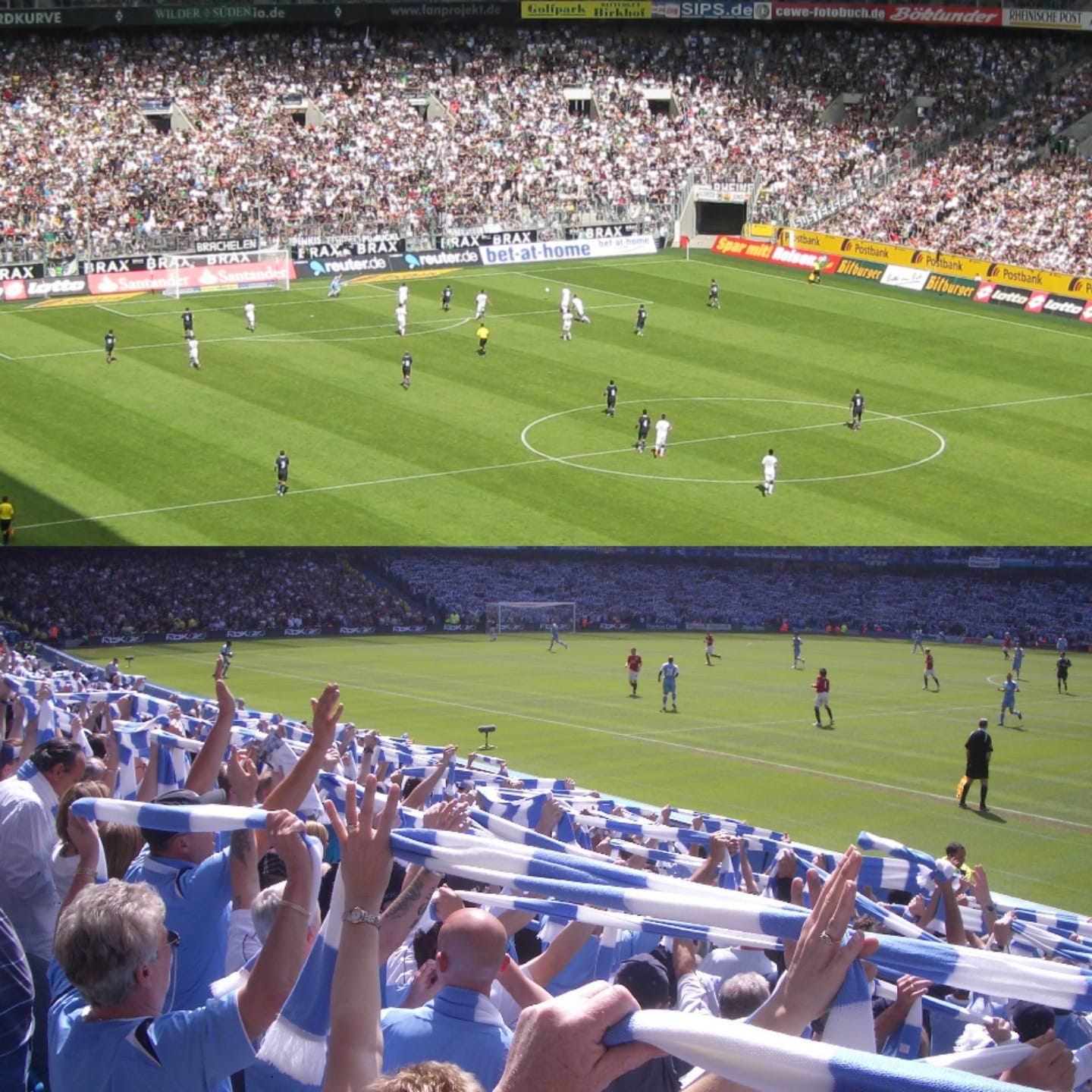
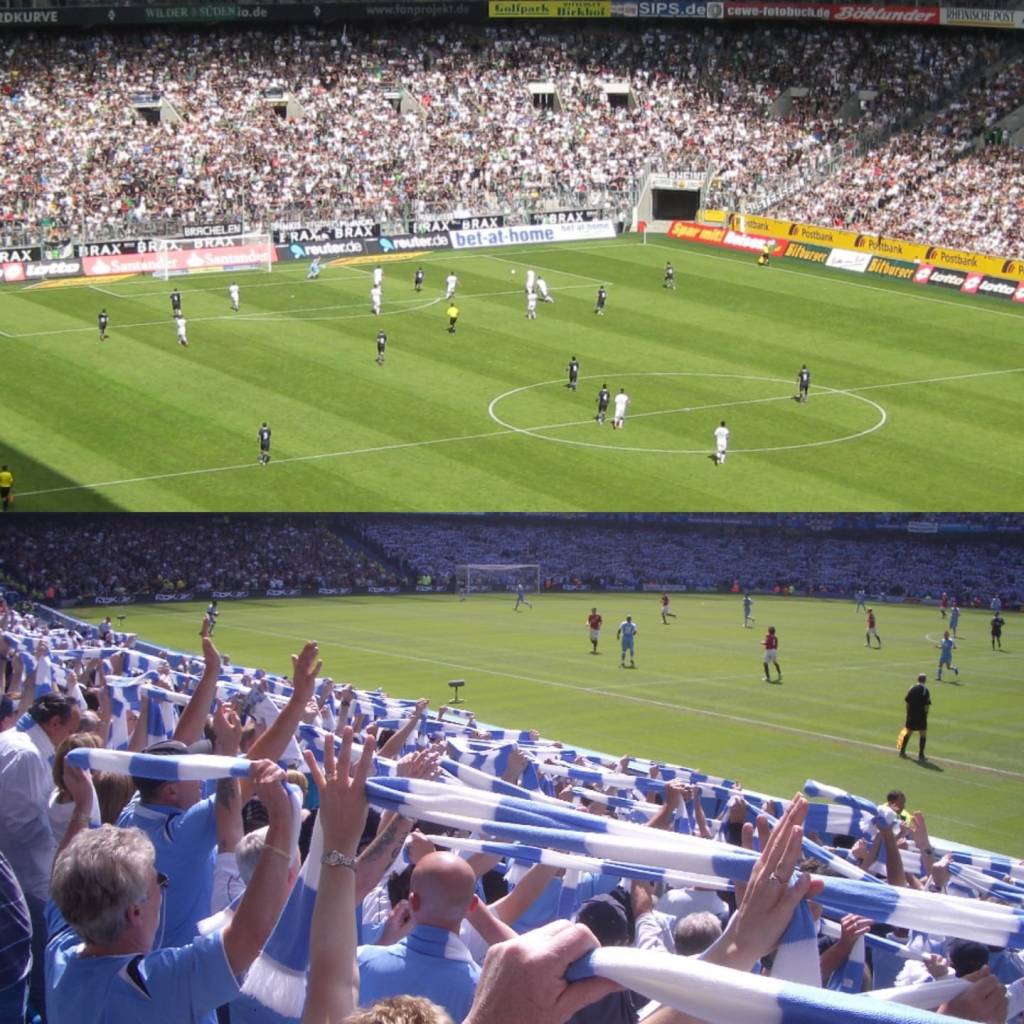
On 24th February, Borussia Mönchengladbach will host Manchester City for the first leg of their last-16 tie in the UEFA Champions League.

The fixture is certainly not one you would have seen in Europe’s elite competition a decade ago. Both sides have come an awfully long way in that time, although they have taken drastically different paths to get there.

Luckily, Sports Gazette’s resident German and Mancunian are on hand to shed light on their respective journeys.

Gladbach: The Favre Effect

The Borussia of the 21st century are worlds apart from the glorious team of the 1970’s when Günter Netzer, Berti Vogts and Jupp Heynckes enchanted German football. In 2007, Gladbach were relegated to the second division and although they returned at the first attempt, the club struggled to build a platform in the Bundesliga.

The fear of playing in the second division was ever-present. But that all changed on 14 February 2011. By this time, Gladbach were bottom of the league, seven points away from safety, and completely out of form. Director of sport Max Eberl drew his last card by installing Swiss manager Lucien Favre.

Favre promoted young goalkeeper Marc-André ter Stegen to be the number one for the last six games, and with the help of winger Marco Reus, Gladbach were ready to fight. What followed was one of the most intense battles in Bundesliga relegation history, culminating in Gladbach eventually having the upper hand over Bochum in the relegation play-off.

“He came; he saw; he conquered,” ter Stegen said of his coach. Just like Caesar’s Roman Empire, Favre’s Borussia were unstoppable, gaining Champions League qualification just one year after narrowly avoiding relegation.

Then what had to happen, happened: Germany’s rising star, Marco Reus, left the club to join his old love and then-champions Borussia Dortmund for £15m. A bargain for Dortmund but a huge amount of money for Gladbach at the time.

The departure of big stars became a pattern for the Foals and is now deeply anchored in their DNA. Ter Stegen in summer 2014, Mahmoud Dahoud in summer 2017 or Thorgan Hazard in summer 2019; Gladbach simply have to cope with restructuring every once in a while – and since Favre signed, they have coped successfully.

“We’ve made a lot of huge steps in the last ten years,” said Eberl in the Kicker Meets DAZN podcast in September 2020.

Impressively, Gladbach are still a top-level team in the Bundesliga, even after manager Favre left the office after 1679 days in September 2015.

In the last ten years, they have reached the European spots six times. No one equates Gladbach with relegation anymore. This might be the biggest achievement of Eberl and his colleague and general manager Stephan Schippers. Thankfully for Gladbach, both signed contract extensions until 2026 last December.

Eberl, often mentioned whenever Bayern Munich look for a new director of sport, is the father of their success. His calm manner, especially in difficult times, made Gladbach the bright club they have become again.

Even though current manager Marco Rose will leave the club at the end of the season, Eberl will find a perfect replacement. He always does.

Players and managers can be replaced, Eberl cannot.

Manchester City’s transformation through riches

By 2011, Manchester City were poised for a big year after settling into the era of Sheikh Mansour.

In the three years since the takeover of the Abu Dhabi United Group in 2008, City had shocked the world with an unsuccessful £103m bid for Kaka and signed some of the Premier League’s most coveted talent, while CEO Gary Cook told the media, amid much laughter, that City were going to be the biggest and best football club in the world.

While Borussia Mönchengladbach were busy battling relegation, the money ploughed into City led to a record £195m annual loss.

That significant investment, however, quickly came to fruition on the pitch. Sergio Aguero was the marquee signing that summer, and his unforgettable last gasp winner against Queens Park Rangers in 2012 sealed City’s first league title for 44 years in startling fashion, sparking bedlam which, to this day, remains one of the Premier League’s most iconic scenes.

In the following years, Roberto Mancini would give way for Manuel Pellegrini, who translated more mammoth investment into silverware.

The establishment of City Football Group, £150m state of the art training facilities and a 6,000-seat expansion of the Etihad stadium represented the finishing touches of City’s brand-new infrastructure as the big-money project finally seemed to be coming to a head.

In 2016, the Blues appointed perhaps the most sought-after manager in world football. City writer and YouTuber Adam Booker said: “I realized City were at a real turning point for success when the club announced that Pep Guardiola would be taking over as manager. I never thought a man that managed Barcelona and Bayern Munich would ever consider taking the job.”

After a season-long warm up period, the Spaniard did not disappoint. By 2018, City had posted a record 100-point haul on their way to another league title, while they held off Liverpool the following year with another incredible 98-point season.

City were playing some of the best football the English game had ever seen. However, the trials and tribulations of becoming rich and successful were embodied by a two-year ban from European competition imposed in 2020 for breaching Financial Fair Play rules.

The decision was eventually overturned on a technicality, but the debacle cast a dark light on City who, to an extent, had always been somewhat self-conscious of their newfound riches.

Booker said: “When I became a fan in 2007, I likely would have been slightly ashamed of City for this type of situation. However, in reality it is a normal thing for clubs or corporations of this size.

“Nowadays, some of the magic of being a City fan is lost. We are a global club with fans that have just come on board within the past few years. I try not to be too hard on fans like that, but I definitely felt ‘special’ as a City fan back before the roaring success.”

On-field matters

This matchup comes at the worst possible time for Gladbach who, up to a month ago, were shaping up for a successful season.

Lars Stindl and Jonas Hoffman were, and still are, posting exceptional numbers but Marco Rose’s men have now slipped to eighth in the Bundesliga after not winning any of their last five games.

The German side defied the odds to make it out of a tough Champions League group containing Real Madrid and Inter Milan, but standards have slipped since then.

The home loss against relegation-threatened Mainz this weekend will do little to boost confidence heading into a tie with a City side who have won 18 games in a row.

Needless to say, Pep Guardiola’s men are on fire. Their poor start to the season was a major cause for concern, but the Spaniard has adapted the side to cope without their leading striker, Sergio Aguero, with extraordinary results.

City’s performances over the past three seasons arguably deserved the title of being ‘the best in Europe’, but they consistently fell short in big moments.

The pressure will be on the Blues to finally come good on their promise of European glory, but the momentum is certainly with them ahead of their clash with Gladbach this week.

Watch Borussia Mönchengladbach v Manchester City on BT Sport 2 tomorrow night at 8:00 pm . 

Water is wet, the sky is blue, another Bundesliga talent joins Bayern Munich

The Bundesliga is getting really boring, isn’t it?

Bayern Munich steaming towards yet another title is a bit like beating your nan on FIFA – a foregone conclusion, no applause required.

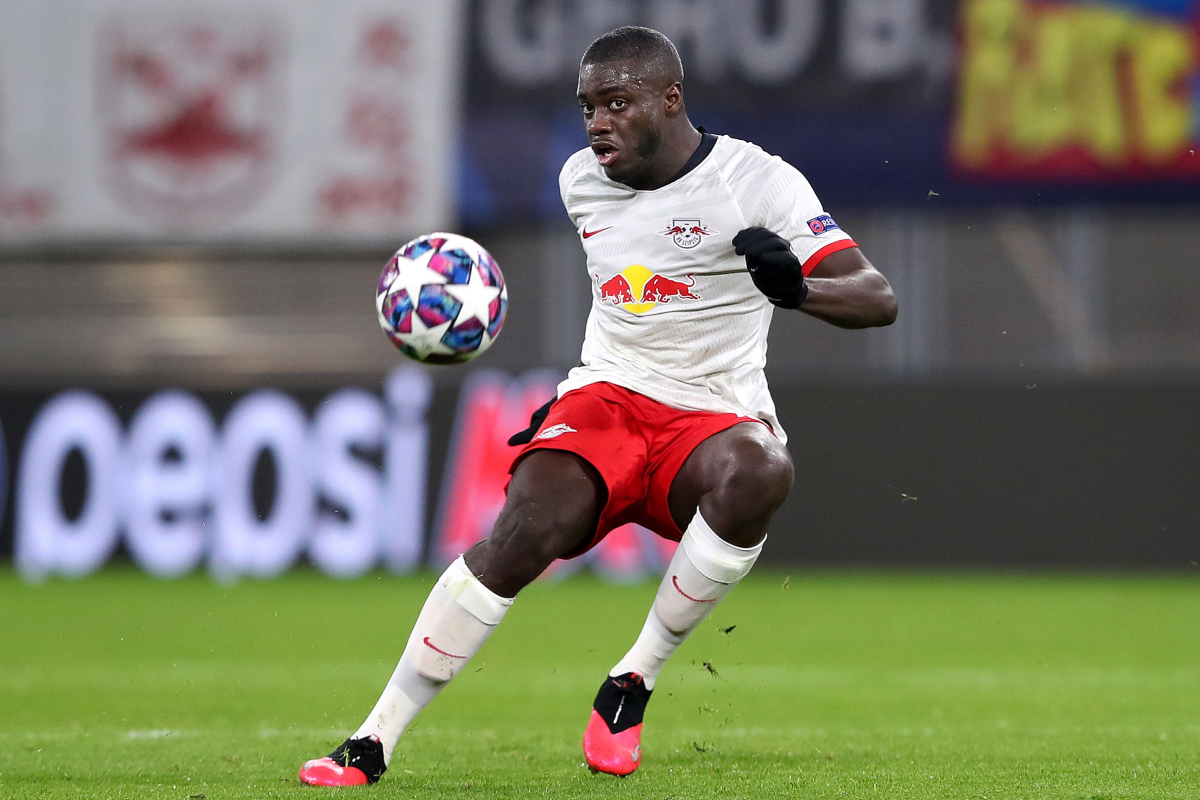
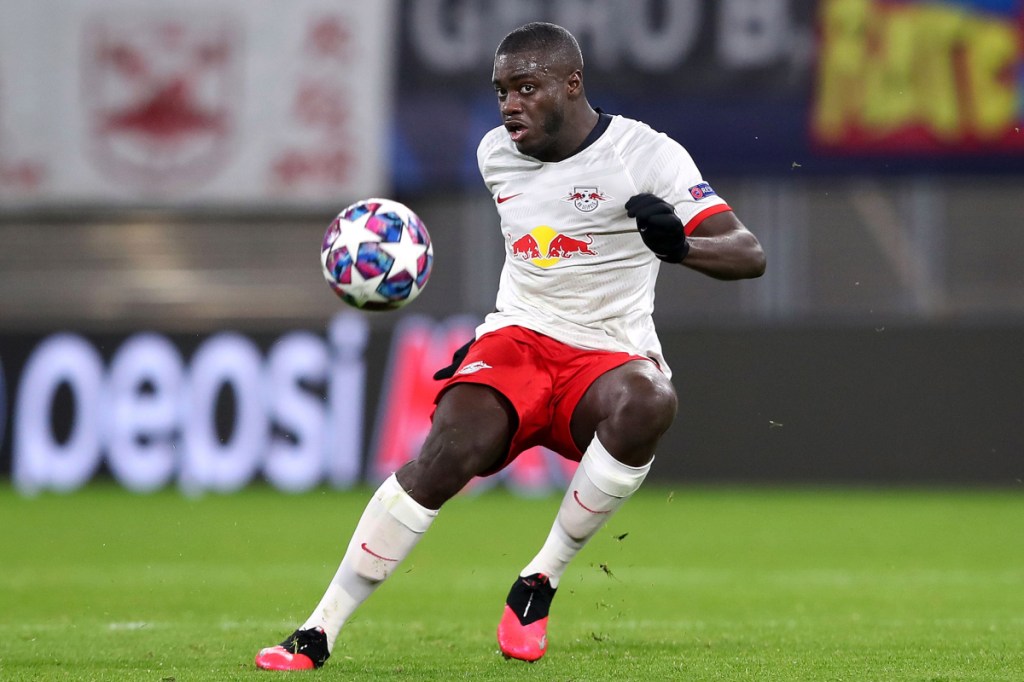
When Dayot Upamecano, one of the world’s most exciting young defenders, confirmed his switch from RB Leipzig to their Bavarian title rivals last week I sighed in chorus with every other dejected neutral around Europe.

The German topflight is rightly lauded for its treatment of fans, but let down by its brain-numbing predictability. While the two nearest challengers to the throne, RB Leipzig and Borussia Dortmund, are selling clubs by their very nature, competitiveness naturally falls by the wayside.

Bayern are always there to capitalise. Several seasons ago, they extracted the spine of Borussia Dortmund’s team, Mats Hummels and Robert Lewandowski, in the space of two years – Bayern were left smiling at a bulging trophy cabinet, while Dortmund could only smile at the balance sheet.

Now, they are steaming towards their ninth title in a row. The Bavarian bully sits firm on the merry-go-round while we all wonder when someone else can have a go.

In Upamecano, Bayern have snapped up a precocious talent. The 22-year-old has already put in 178 performances which turned the head of every major club in Europe. His instinct to progress the ball forward from centre-back gives him the unique skillset which makes him so desirable. I’m not bitter, I promise!

Although Leipzig have flipped him for a tidy £30m profit, the release clause in his contract allowed him to leave for a bargain bucket price. Meanwhile, they have a strapping young Frenchman sized void to fill in their backline as they seek to close the gap on the very club they sold him to.

The path taken by Upamecano in his young career has been so painfully foreseeable. Having impressed as a teenager for RB Salzburg, he made the step up to sister club RB Leipzig. Having impressed in the Bundesliga, Bayern came calling. They see talent, they hoover it up. We’ll call them Heinrich the hoover, they play in red after all.

Feeder clubs are common in world football: Udinese and Watford, Girona and Manchester City – the common theme is the small supplying the large with those who have outgrown them, while the large send developing talent the other way.

Only in Germany, though, is the top dog effectively fed by their sell-happy title ‘rivals’. No wonder it is so monotonous.

As summarised by Bavarian Football Works: “Winning trophies has become more of a hobby for Bayern under Hansi Flick and a young talent like Upamecano wanting to be a part of such a club is not a big surprise.”

In many ways, winning is less like a hobby but an addiction for Bayern: expensive to maintain while hurting everyone around them.

German success in European competition certainly keeps their clubs relevant, but with each passing year that Bayern lift the Meisterschale the world grows less and less interested in domestic German football.

It’s sad to see in a league which has a wealth of ideas, talent and potential, but what do you expect if whenever we approach the juicy end of the season, Bayern break clear of the pack?

Italy’s Serie A is emerging from a similar spell. Juventus have lifted the Scudetto every year since 2011 in a period of utter dominance. Now, they sit fourth in the table, eight points off the top as Inter Milan, spearheaded by the rampant Romelu Lukaku lead the way.

Can you imagine Inter selling their star man to Juventus at the end of the season? Not a chance.

Fans around Europe are frothing at the mouth with Serie A poised for its most entertaining, competitive spell in decades. Germany’s chasing pack should grow a backbone and learn a thing or two.

The Isle of Man TT: Risk and reward on the ragged edge

Only marginally more competitors have won an Isle of Man TT race than those who have died trying. That is the risk attached to victory in a two-hour adrenaline rush that keeps riders and fans coming back year after year.

Conceived in 1907, the TT is unparalleled. The historic races comprise of six 38-mile laps of the island where bikes can reach 200mph on tight, twisting country roads.

“It is the pinnacle of speed, danger and risk. If you take any part of that away then it wouldn’t be what it is – the ultimate thrill,” said 2013 winner James Hillier. “If we hadn’t seen someone do it and done it ourselves then we wouldn’t believe it was doable to ride at that pace for that long,” he added.

i02/06/2018: James Hillier (Kawasaki/Quattro Plant JG Speedfit Kawasaki) at Ballaugh Bridge during the RST Superbike TT race. PICTURE BY DAVE KNEEN

Seeing the ride-along footage from a racer like Hillier does not make it any easier to believe – reminiscent only of someone playing the final level of a video game on expert difficulty for two hours straight, without the luxury of a restart button.

Davey Todd, the 25-year-old racer from Middlesbrough who finished sixth in the 2019 Senior race, said: “In other races you’re racing the competitors, but you race the circuit in the Isle of Man TT.”

Indeed, while the riders share mutual love and respect, the course itself is spiteful. It is out to get you from the start, which in itself embodies the skill and consequence associated with the race.

The Ragged Edge

Bike racing is a dangerous sport. Joey Dunlop, the granddaddy of the TT with an incredible 26 victories, survived all his triumphs only to be tragically killed at the age of 48 while racing in Estonia.

The TT itself has claimed 260 lives since 1907, and not just in the early years. As time goes on, bikes get faster and 63 riders have died racing the TT since the turn of the millennium. This represents an obvious concern, but the upsides are simply too good to keep riders and spectators away.

Todd said: “You can be photographed passing a 30mph sign going through a small village and you might be doing 200mph.

“It is trying not to blink for two hours. You make a mistake and there are no run-off areas or crash barriers, it’s a wall or a hedge or off the edge of a cliff or into a house – it’s not very forgiving if you do have a lapse in concentration.”

His fellow competitor Hillier added: “The hardest part is overcoming the instinct to slow down and not scare yourself. I refer to it as the self-preservation instinct.

“There are a lot of sections where your internal alarms are going off telling you to slow down, but then there’s that competitive drive telling you the opposite.”

Riders have no choice but to suppress their instincts to slow down, but the real-life consequences of being subject to such danger are, occasionally, unavoidable.

Daley Mathison, a close friend of Todd’s, tragically died during the superbike TT race in 2019.

Todd said: “We were so close. We were team-mates, we lived locally to each other, he was my best friend. All riders set off one at a time but for that race he set off just 10 seconds behind me and you do start to think when the race gets red flagged, ‘what if it’s him?’.”

After the tragic accident, Todd opted to race on. According to him, the mental task of completing a TT is the perfect vehicle for distraction.

In moments like that, the risks of taking part seem incomprehensible. Then again, most have never experienced the rewards.

Making it Make Sense

Pride and accomplishment go hand in hand with simply completing six laps of the TT. Two hours of faced fears, adrenaline and fierce competition at the top end of an enthralling sport.

Hillier said: “Once you’ve done it, normal life becomes quite mundane. That thrill factor is very hard to replicate anywhere else, it’s almost like drinking a fine wine and then going back to the cheap stuff.”

With this in mind, Hillier has been something of a connoisseur since his debut in 2008, thrusting himself into a group of less than 300 people who have won a TT race after taking the lightweight class in 2013.

“It was a special day for me, a big box ticked and something growing up I never thought possible,” said Hillier.

“I first went when I was 12 and if someone told me then that I would be there racing and eventually win one I would never have believed it.”

Given the immensely loyal following at the heart of the event, the COVID-19 pandemic has prompted cancellations in both 2020 and ahead of time in 2021.

The three-year hiatus by the time 2022 rolls around will be the longest since the end of the Second World War.

Hillier will be keen to add to his title, while Todd, an accomplished young rider who has only competed in the TT twice, will no doubt be itching to get back amongst the action.

Pompey’s community work shines up and down the leagues

A series of ownership mishaps kickstarted a turbulent decade at Portsmouth Football Club. After relegation from the Premier League in 2010, Pompey found themselves in England’s fourth division by 2013.

In financial ruin after two spells in administration, the club was on the brink of going out of existence. In a sharp turn-around in fortunes, however, Pompey are now enjoying a resurgence on and off the pitch.

Spirit

Propelled by Portsmouth in the Community (PITC), Pompey were recognised as the EFL Community Club of the Year for 2017 and 2019. Meanwhile, the Fratton Park faithful are enjoying a League One promotion push this campaign.

Ben Close and Andy Cannon, courtesy of Clare Martin

In light of this traumatic journey Clare Martin, CEO of PITC, provides insight on how Portsmouth’s community spirit continued to thrive, even while the club itself did not.

Relegation from football’s most glamorous division comes with a huge financial hit. As such, one might expect community work to slip down the pecking order.

“There was a lot of nervousness from funders,” explains Claire. “We were very close to no longer existing. The club itself was also suffering, at one point losing 80 people in a day.

“When we were in the Premier League, they funded three projects we ran at the time. As long as we hit targets they continued to fund them.

“The core funding is so much more, so there aren’t the pressures of bringing money in that there are in the lower leagues.”

Survival

The dire situation behind the scenes was subsidised by a fiercely loyal fanbase who sang their way down the leagues. In 2013, Portsmouth Community Football Club Limited took ownership to become one of the few fan-owned football clubs in England.

Claire cites that remarkable fan-power as the driving factor behind the club, and PITC’s survival.

She said: “As things moved on the community just got behind the club. I remember getting thrashed at Swindon with the fans singing and partying, it became almost like a Dunkirk spirit.

“In fact, the proper die-hard Pompey fans almost got behind the club more when they were doing worse because they felt like the club needed that support so for us, participation stayed the same.”

Sustained participation has facilitated new initiatives like ‘Blue Kitchen’. So far the Chief Executive, the Lord Mayor and several players have cooked and taught their favourite meals on film so that children can cook along with their heroes at home during lockdown – ingredients courtesy of PITC. 

All told, the community around Portsmouth have cultivated a club to be proud of.

Values

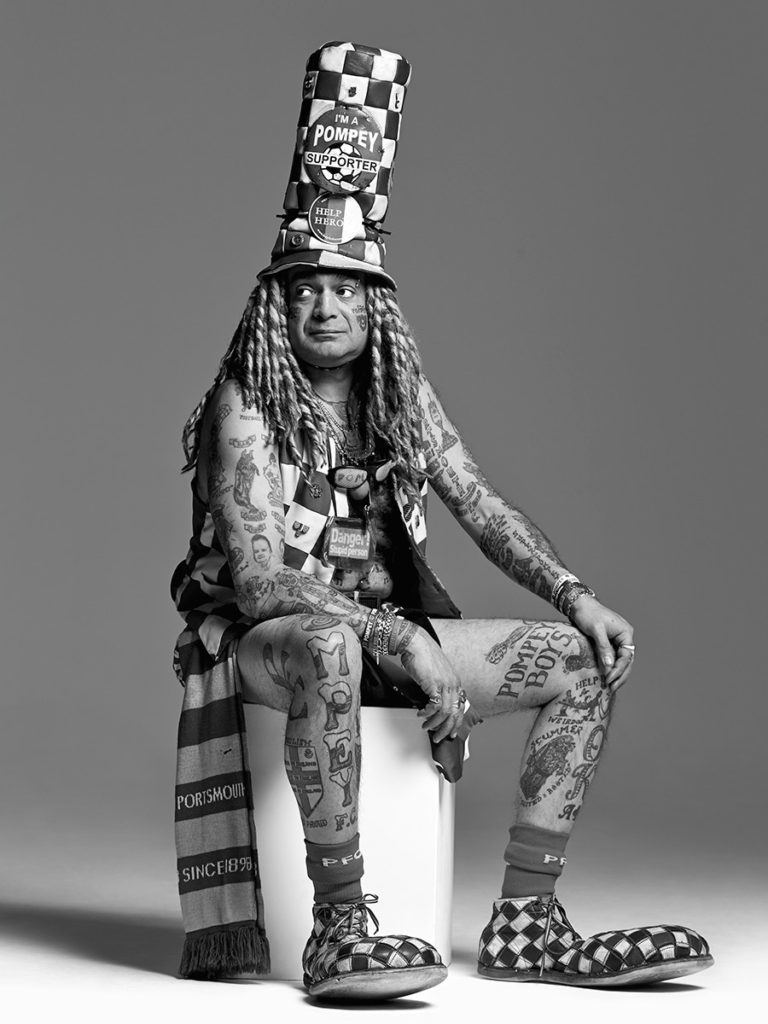
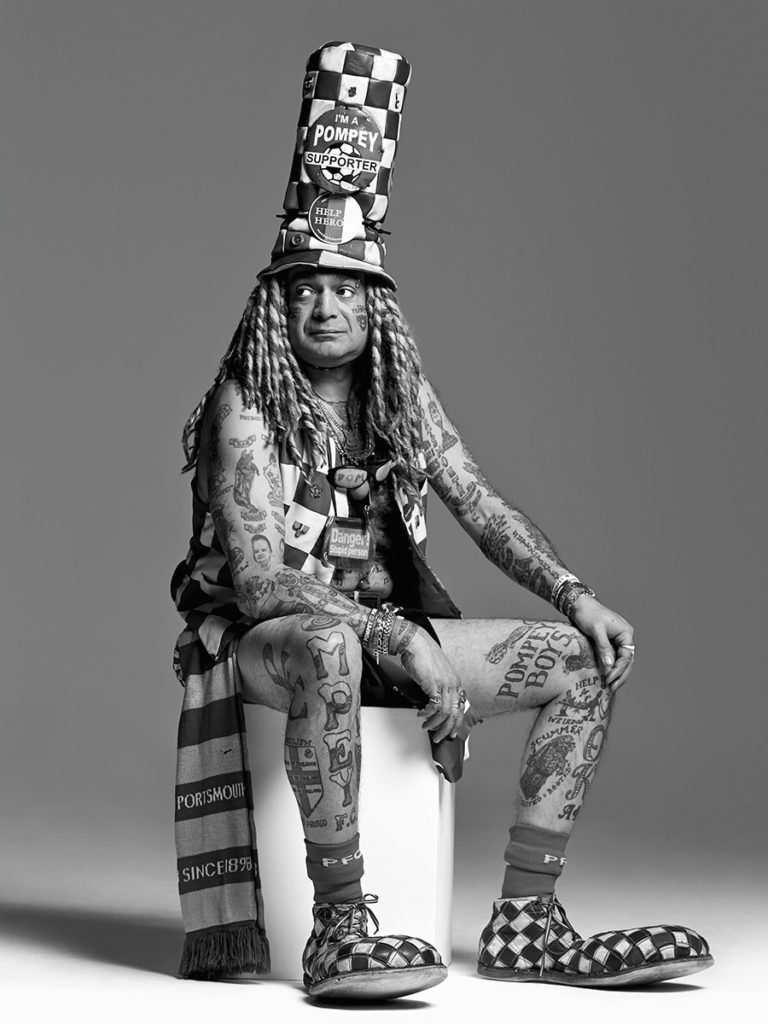
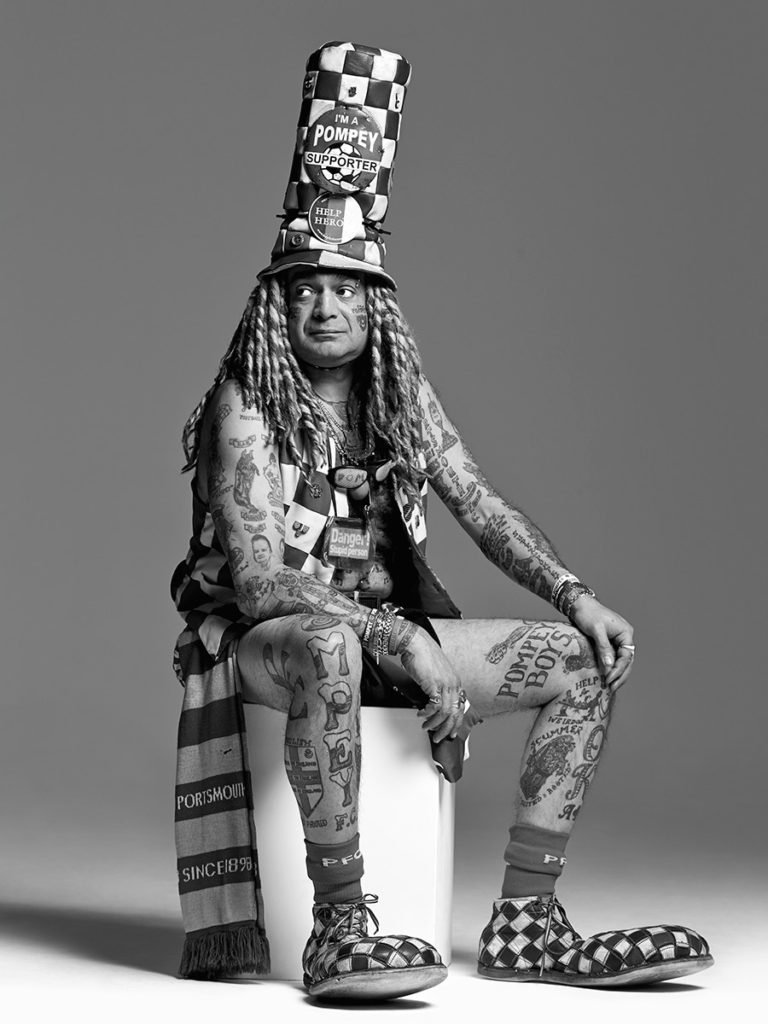
Well-known Pompey fan John Westwood, who dons a bell and a stove-pipe hat home and away, spoke glowingly about Portsmouth’s status as a community-based club.

Courtesy of John Westwood

He said: “It makes you so proud because that is the power of football. They can help under-privileged children and the poorest in the community, they can give children who have troubles something to hold onto and believe in to better their life.

“The way Claire Martin has translated those values onto the street and the way it has been recognised nationally is just unbelievable – it is what more clubs should be doing. We’re so proud to have that in our city and to be leaders in that field.”

Clearly, the impact of PITC’s nationally-acclaimed work is felt throughout club. Many clubs struggle to cope when in freefall, but Claire points out Portsmouth’s special circumstances.

“We are very lucky being a one-club city so there is no conflict here – there are very few people in Portsmouth who don’t follow us to some extent even if they are not die-hard Pompey fans.

“Lower league clubs sitting right in the heart of their communities might have less money but the actual impact that they can make is greater.”

Purpose

That impact is becoming a primary purpose of the modern football club. Portsmouth continued to forge close ties with those most in need in the local community throughout their journey from the top to the bottom of the English Football League. While they now trudge back up, the passion and purpose remains the same.

Claire (pictured below) added: “Football clubs used to be about football with some projects linked to it. Now football has almost become the secondary aspect to their big community projects.”

Certainly, community work has become a huge aspect of Portsmouth’s identity. Claire, who has worked for the club for almost 20 years, has played a large part in that alongside the community department’s hugely committed team of employees.

Portsmouth FC and PITC seem to have weathered the storm. It is a remarkable story but it has come at great emotional cost to those involved, as Claire describes.

“It’s my baby and, if I had let things go in 2012, I would have failed,” she says.

“One morning I got out of bed and burst into tears. I thought ‘I can’t do this anymore’. I sat on the bed thinking, ‘this is the day’, if I go back under the duvet then I’m done and I won’t go back.

“We kept fighting on though and we’re still here.”

Portsmouth FC: A Spirited Comeback from an Ownership Catastrophe

Between 2005 and 2011, Portsmouth’s boardroom dragged a proud club to the brink of non-existence.

After Sulaiman Al-Fahim was imprisoned for stealing £5m from his wife to make his first down payment on the club, Pompey eventually fell into the hands of Vladimir Antonov.

As TaleOfTwoHalves summarises: “Portsmouth had already been through two fake sheikhs and a busted businessman, now the debt collector was handing the club over to a Russian gangster.”

Sure enough, five months taking over Antonov was the subject of a European arrest warrant for a series of financial crimes. With Pompey in over £100m worth of debt, they were plunged into their second administration in three seasons.

Financially ruined, Portsmouth plummeted from England’s top-flight to the fourth tier in just three seasons.

Eventually, it was the fans who steadied the sinking ship by buying out the club in 2013.

Now vying for promotion in League One under the ownership of popular figure Michael Eisner, Pompey are in the midst of a most remarkable transformation.

Well-known fan John Westwood, recognisable by his tattoos, bell and stove-pipe hat worn home and away, provides fascinating insight into Portsmouth’s spirited fightback from ownership injustice.

Courtesy of John Westwood

Business Becomes Personal

The wounds of such a turbulent period are still felt by Pompey fans who naturally feel wronged by those behind the scenes.

Westwood said: “The Premier League and the FA are both accountable – neither of them did fit and proper tests. They’re the governing body and they allowed these people to run our club, and they didn’t take any responsibility for it when it went all wrong. We were just left for the wolves and the vultures to pick over.”

The fit-and-proper-person test was introduced as a means of assessing prospective football club owners in 2004, but only recently as more clubs encounter financial trouble has it been thrust into the limelight.

Back when Pompey were nearing rock bottom, the test was still in its infancy, at least relatively speaking. By 2012, a series of unfit owners had brought the club to within a hair’s breadth of liquidation.

“I’m not a violent person but if I could get those people in a room on my own I would punch them all in the face. They were disgusting, they treated a passion and a city with disrespect.

“I was in a very bad place. It was like someone had put a member of my family on a life support machine. It became personal, it became family and I will hate them for the rest of my life,” he said.

Bonds Forged Through Hard Times

From the glitz and glamour of Stamford Bridge and Old Trafford in 2010, Portsmouth’s first away game in 2013 was a 2-2 draw at Accrington Stanley.

The financial woes at Fratton Park resulted in points deductions and player strikes which had consigned the club to domestic freefall. Amazingly, the die-hard Pompey fans continued to generate a ‘Dunkirk spirit’ which brought them even closer to the club they love.

Westwood said: “There’s two things we’re proud of here: the dockyards and the football club. But it’s the club that makes the place tick.

“When we were in the Premier League it was all about money, the man in the street didn’t seem to matter anymore. There were lads I used to see at Fratton Park who had been going for over 20 years, they had lost jobs and relationships over Pompey and after three years of being in the Premier League they stopped going because they didn’t feel part of it anymore.

“It all became so sanitised. The passion for football comes from the man in the street, he’s the one who will be there through thick and thin.”

Of course, when Pompey fell on hard times it was still all about the money, but for the purpose of survival rather than greed. In 2013, the Pompey Supporters Trust made Portsmouth one of the only fan-owned clubs in the country.

“The spirit of that club is incredible,” said Westwood. “We are the 12th man if any club ever deserved that accolade.

“When the fans bought the club it was a breath of fresh air. We felt part of the club again, we felt as though we had an input. We did something magnificent.”

Portsmouth – The Fall And Rise

The Pompey Supporters Trust owned the club until 2017. Former Disney CEO Michael Eisner, backed by a venture capital group, has since taken over with the aim of restoring the club’s success before selling for a large profit.

Of course, these financial incentives may make some Pompey fans wince, but at least they are now led by an owner with a level of legitimacy and competence.

Portsmouth currently sit second in League One, seemingly on a charge back up the English Football Leagues. For Westwood, this provokes mixed feelings.

“If we never went to the Premier League again I wouldn’t care. But there is the other part of me that wants to go back and stick two fingers up to them because they didn’t help us.

“If we had been one of their iconic clubs like Manchester United or Liverpool, they would have bent over backwards to help us but they couldn’t wait to get rid of us.

“Now we have found a fantastic owner in Eisner who wants to do it right – he wants to service the club’s debt, he wants to expand the club because that’s in his best interest, but he won’t plunge us into debt again.”

Of course, all eyes will be on Eisner given Portsmouth’s recent ownership history: not just fans, but the FA and Premier League too given their poor treatment of Pompey when they were passed from punter to incompetent punter just a decade ago.

This being said, their time in the lower leagues has brought the club closer together. The community around the club is buzzing as always and they were awarded EFL Community Club of the Year for 2017 and 2019.

Portsmouth’s commendable fanbase seem happy with Eisner’s work so far, although potential  success to come could present a moral dilemma if ‘the man in the street’ again gets left behind.

As for Westwood, he has pledged to be there no matter what. When your middle name is ‘Portsmouth Football Club’ and the badge is tattooed all over your body, that is unlikely to change.

The highs and lows of running an antique book shop during the week bear striking similarities to his experience of supporting Portsmouth during the past decade:

“I’m thankful to have both things in my life: the football and the books. I had to sell my flat to keep the shop going so everything about the club and the shop resonates together. It’s all backs against the wall but I love them both.”

Racism In Football: Was The Paris Walk-Off A Game-Changer?

Paris Saint-Germain’s Champions League tie with İstanbul Başakşehir on Tuesday 8 December 2020 will go down in history, but not for Neymar’s hat-trick that sent the French side through to the last 16.

What immortalised the game was a racist incident which pushed the players, and perhaps the sport, to breaking point.

Fourth official Sebastian Colțescu was heard to have said: “The Black one over there. Go and check who he is. The black one over there, it’s not possible to act like that,” when directing the referee towards Basaksehir assistant manager Pierre Webó.

Basaksehir player Demba Ba called out Colțescu, backed up by teammates and staff who demanded an explanation. When they did not get one, both sets of players and staff walked off the pitch in protest.

Empty stadiums due to the COVID-19 pandemic may have led players of colour to expect a reprieve from the racist abuse suffered all-too-often at the hands of football crowds. However, the quiet of an empty Parc des Princes allowed microphones to capture every word of an incident made more concerning by the fact the man responsible was a UEFA official.

On Tuesday night, enough was enough. Protocols and punishments have evolved, but not nearly fast enough, and players are so often forced to take matters into their own hands.

Many questions now remain. Did the players do the right thing? How do UEFA respond? How significant was that moment in a seemingly unending fight against racism in football?

A brief history of slaps on the wrist

Going back ten years, both teams walking off the pitch in protest was almost unthinkable. At the time, such action would likely have been met with a lack of understanding and support.

Instead, repercussions were generally left to football’s governing bodies. If the punishments imposed are intended to reflect the severity of the offence in the eyes of those handing them down, then it’s no wonder players of colour have felt their concerns aren’t taken seriously.

In 2004, the Spanish FA were fined £45,000 after crowds in Madrid directed monkey chants towards England players Shaun Wright-Phillips and Ashley Cole. Meanwhile, Cameroon were fined almost twice as much for playing in unauthorised kit during the 2004 African Cup of Nations.

In 2012, the Serbian FA were fined £65,000 due to racist abuse from the crowd at an Under-21 game against England. Danny Rose kicked the ball into the crowd in protest, a reaction that was deemed worthy of a red card, and the Serbian FA publicly branded him ‘inappropriate, unsportsmanlike and vulgar’.

At the European Championships that summer, UEFA fined Croatia £60,000 for their fans’ abuse of Mario Balotelli, of whom more later.  On the same day, Denmark’s Nicklas Bendtner was fined £80,000 for displaying a betting firm’s logo on his underwear.

The truth is, until recently, football’s governing bodies brandished little more than fines which would barely put a dent in a banker’s salary, let alone a national football association’s budget.

Points deductions and partial or full stadium closures have recently been introduced as combative methods, but they are not widespread. In fact, all too often we have seen no response at all.

Wilful denial and unenforced rules

2019 was a dark year for racism in Italian football. Moise Kean was abused by Cagliari fans, prompting him to celebrate in front of them after scoring for Juventus.

Rather than supporting Kean, his manager Massimiliano Allegri and senior teammate Leonardo Bonucci criticised him after the game, the latter saying the blame for the fans’ actions was 50/50.

A few months later, Romelu Lukaku suffered at the same ground. The clip where monkey chants can clearly be heard was widely circulated on social media, although the club denied all accusations.

An independent sports judging panel found Cagliari clear of any wrongdoing, while Inter Milan ultra group Curva Nord told Lukaku that the racist chants were a sign of respect.

In November, Balotelli kicked a ball into the crowd after receiving abuse against Hellas Verona. Balotelli threatened to walk off the pitch, although teammates pleaded with him to stay on. Serie A’s response to a third high profile racism incident in just seven months was to close Verona’s stadium, but only partially, and for only one game.

Despite their poor record, Italy provided the backdrop for another player walk-off in 2013.

Playing a pre-season friendly for AC Milan against fourth division Pro Patria, Kevin-Prince Boateng kicked the ball into the abusive crowd, ripped his shirt off and applauded all other sections of the stadium while walking off. His teammates joined him, and the crowd directed anger towards the racist chanters.

Boateng’s decision was praised by most, including then-Milan manager Allegri, who said: “I’m disappointed and saddened but I think it was the right decision not to return to the field out of respect for all other Black players.”

In the space of six years, Allegri went from praising Boateng for reacting in an inconsequential pre-season friendly, to criticising Kean for reacting in an important league game. Perhaps Allegri was only willing to call out racism when there was no risk attached.

Surely, if countries around Europe are at different stages of tackling racism in football, a universal protocol enforced by European football’s governing body UEFA should be introduced?

Shockingly, it was introduced 11 years ago. The UEFA three-step protocol has been in place since 2009 but has barely ever been enforced. The protocol reads as follows:

1. Stop the match while the stadium announcer reads out an anti-racism statement.
2. If the abuse persists, make another statement and send the players to the dressing room.
3. If the abuse still persists, abandon the match.

When England travelled to Bulgaria in 2019, the abuse from the crowd was so severe that it triggered stage two of the protocol. Two announcements were read out over the PA, but England made the collective decision to see out the game.

On that day, the referee opted not to escalate proceedings to step three, and the players opted to stay on the field. Both were staring into uncharted waters, but the incident showed that it was just a matter of time before someone took that leap of faith.

Thirteen months on in Paris, the most unlikely culprit left the three-step protocol redundant as the players immediately abandoned the match.

Where do we stand?

Howard Gayle, Liverpool’s first ever Black footballer, expressed his feelings towards players leaving the field in a 2019 article with The Guardian. According to Gayle, the resilience shown by Black players to play through the abuse over the past 40 years is noble, and they should not let the racists win by walking off.

However, the incident involving Boateng saw the majority of the crowd turning on his racist abusers, while Colțescu certainly did not ‘win’ when he defined Webó entirely by the colour of his skin in Paris.

Further on, Gayle said: “Are England going to walk off if they are 3-0 up with ten minutes left? Will they make a statement? Think about it.”

But PSG’s qualification for the knockout rounds of the Champions League was at stake, and they did make that statement by walking off the field in solidarity with their opposition.

Gayle has every right to take pride in the fact that he stared abuse in the face and played on despite it. But, ultimately, racism in football is alive and there is work still to be done.

On Tuesday 8 December 2020, two teams walked off the field in a high-profile game in disgust against racist abuse and solidarity with Pierre Webó. The mother duck has jumped into the pond, and all others can now follow without fear.

If we learn the right lessons, that night in Paris could mark the beginning of the end for small-scale responses to racism in football.

Design a site like this with WordPress.com
Get started